

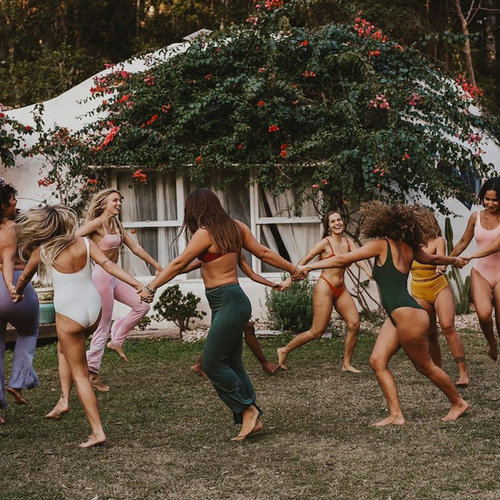
How important is sustainability to you?
At Iloveyoga, we carefully and consciously select our yoga clothing. We choose brands that produce sustainably, use natural materials, opt for responsible packaging, and take good care of their employees.
We are happy to explain more about the different fabrics and materials used in yoga clothing, so you can discover how important these choices are for nature and for our future.
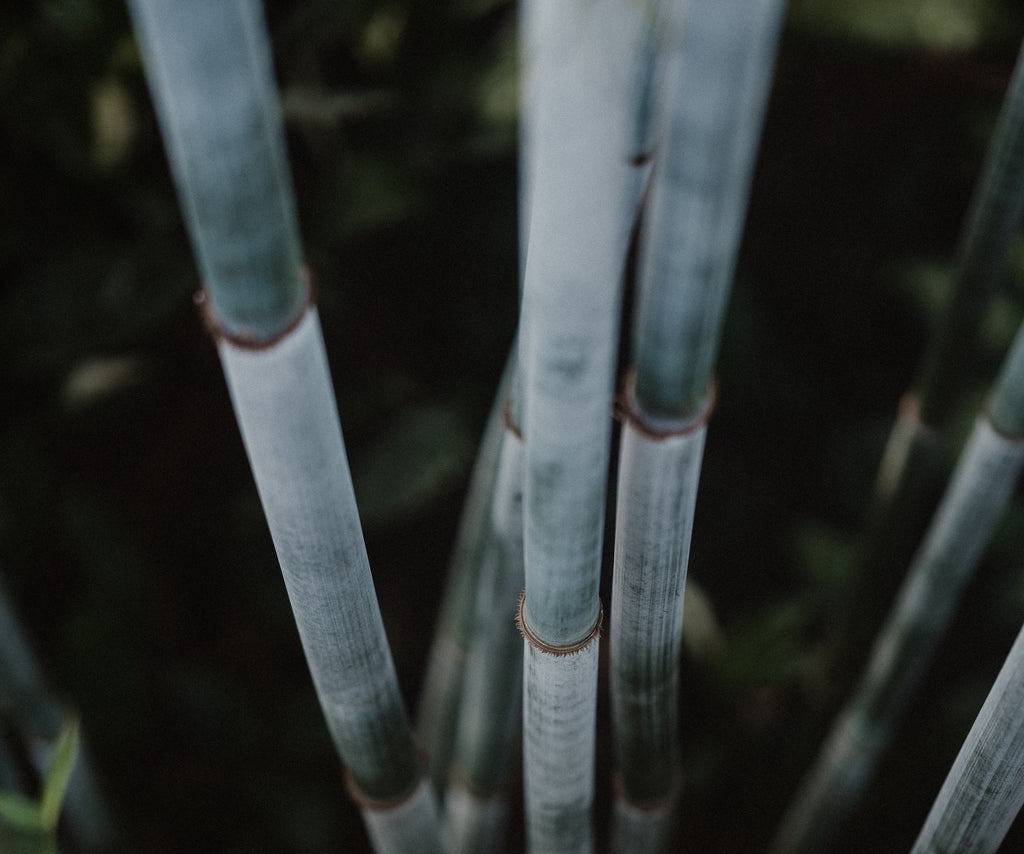
Bamboo
Bamboo is fast-growing, requires little water only and no pesticides at all. It self-regenerates from its own roots, so it doesn’t need to be replanted. Bamboo is a wonderful, comfortable, breathable and lightweight option for active and underwear. The bamboo fibers we use are certified by OEKO-TEXⓇ which means the fabric is free from harmful chemicals and residues.
Bamboo is, due to its softness, stretchiness and flexibility, prone to loose a little bit of shape after use, however, will come back to its original shape once it has been washed.
The use of Bamboo for the textile industry brings high promises, however, it is still subject to optimisation along the process, in particular when it comes to the harvest of sustainably grown bamboo and to manufacturing the raw fabric, in particular avoiding the release of harmful chemicals used in production into waterways.
The soft Bamboo fabric is won through what is known as the Viscose process which involves dissolving cellulose material (Bamboo) in a chemical solution to produce a pulpy viscous substance. This is then pushed through a spinneret, and “spun” into the fibres that can then be made into threads and fabrics. Making bamboo soft involves the use of chemicals. The high demand for bamboo at this stage has initiated a great deal of improvement in chemical management and waste treatment.
Bamboo fabric has potential—it is much less costly to produce than cotton, avoids the extensive use of pesticides in non-organic cotton production, and production is not as chemically intensive as polyester. We are staying on top of improved practices when it comes to the use of Bamboo in our products.
Shop Bamboo: Studio K, Shambhala, Urban Goddess, Shambhala
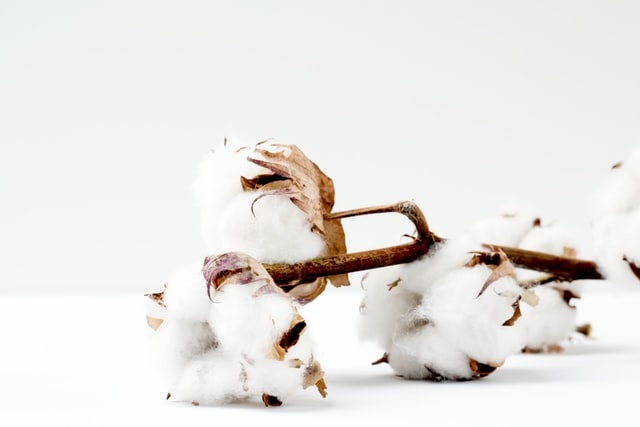
Organic Cotton
Soft, light, and breathable – cotton is a fibre often associated with quality clothing and is quite commonly used on a daily base in many household products. Cotton is a crop that has undergone a big journey of cleaning up its reputation, from being the crop that launched slavery during the colonial days in America to now being utilised as a more earth-friendly variant known as Organic cotton. Cotton is a natural fibre and has the advantage of being a completely natural product, which makes it biodegradable. Although cotton is a naturally occurring textile, its production is, however, haunted by claims of pollution, labor exploitation, and slavery, until today.
Conventional Cotton is considered a ‘thirsty crop’ – it requires a lot of water to grow and is primarily grown in arid conditions and also one of the most chemical-intensive which affects the waterways in addition to its exorbitant water consumption. The chemicals used have tremendous impact on the earth’s air, water, soil, and the health of people in cotton-growing areas. It is said Cotton uses 25% of the world’s pesticides. They are among the most toxic chemicals as classified by the Environmental Protection Agency. Sadly, the problem is even worse in developing countries, in which most fashion textiles are manufactured. In addition to destroying the land, thousands of farmers die from exposure to these chemicals every year. This just doesn't sit well with us.
Organic cotton addresses many of the problems conventional cotton brings to the table. Our organic cotton is grown using methods and materials that have a low impact on the environment using no pesticides, herbicides, synthetic fertilizers or other chemicals, from seeds which have not been genetically modified, and helps to build a biologically diverse and healthier agriculture. Another plus: organic cotton seeds are cheaper then conventional cotton seeds which helps farmers to escape the cycle of debt and poverty they find themselves in by using chemicals and GMO seeds.
Eliminating the use of these harmful chemicals in cotton is the first step in a more sustainable and chemical free future. All cotton sold as organic must meet strict regulations covering how the cotton is grown. The organic cotton that we use are certified by Global Organic Textile Standard, GOTS (http://www.global-standard.org).
Shop organic cotton: Urban Goddess, Spirit Of Om, Shambhala
Gots
The Global Organic Textile Standard, GOTS for short, is the world's leading standard for the production of textiles made from ecological fibers. It defines demanding ecological and social criteria along the entire textile chain, compliance with which is regularly monitored. Urban Goddess, Funky Simplicity en Spirit of Om have only used organic cotton for all of their cotton-based items. warded the GOTS.